Ashwagandha and Testosterone: The Cortisol Link Most Men Miss
Does ashwagandha raise testosterone?
In several small placebo-controlled trials it did, but indirectly. Ashwagandha is an adaptogen that lowers cortisol, the stress hormone that suppresses testosterone. In one 2019 study, men taking 600 mg of a standardised KSM-66 extract for eight weeks saw testosterone rise about 14.7% more than placebo. It supports the hormone by removing a brake, not by stimulating the testes directly.
- The mechanism is cortisol reduction, so the men who gain most are the stressed and the run-down.
- The studied dose is roughly 300–600 mg a day of a withanolide-standardised extract, taken for 8–12 weeks.
- It pairs logically with tongkat ali, which works on luteinizing hormone from the opposite direction.
Ask most men what an ashwagandha testosterone supplement is supposed to do and they picture a lever: swallow the root, push the number up. The real story is quieter and, once you see it, far more convincing. Ashwagandha does not appear to shove testosterone upward by force. It works on the thing that has been holding testosterone down — the stress hormone cortisol. That one distinction explains why an ancient Ayurvedic root keeps turning up in modern men's-health formulas, and why a well-designed multi-ingredient blend treats stress as part of the hormone equation rather than an afterthought.
If you have been reading ingredient lists trying to work out which of them actually earns its place, this is the article that reframes the question. The point is not whether ashwagandha is a miracle. It plainly is not. The point is that it does a specific, measurable job — and that job is the one most tired, overworked men over forty actually need done.
Why chronic stress quietly lowers your testosterone
Cortisol and testosterone are, in a rough but useful sense, antagonists. Cortisol is the hormone of mobilisation: it goes up when your body decides there is a threat to deal with, whether that threat is a sprint away from a predator or a quarter of missed sleep and unpaid invoices. In an emergency that is exactly what you want. The trouble is that the modern version of the emergency never ends. Deadlines, poor sleep, over-training, alcohol, and the low background hum of financial and family pressure keep the stress axis switched on for months at a stretch.
When cortisol stays elevated, the body reads the situation as no time to build. Testosterone is fundamentally an anabolic, build-and-maintain signal, and it is one of the first things the body deprioritises when it believes it is under siege. Elevated cortisol is associated with lower free testosterone — the fraction not bound to carrier proteins, and therefore the fraction that is biologically active. You can be producing a reasonable amount of total testosterone and still feel flat, because chronic stress has skewed how much of it is actually available.
This is why the men who feel most obviously low are so often the men who are most obviously stressed. Poor sleep, a demanding job, and no recovery time are not separate from the hormone picture; they are, in large part, the hormone picture. Any honest conversation about supporting testosterone naturally has to start here, which is exactly where our companion guide on the the daily habits that support testosterone naturally begins as well.
What the ashwagandha testosterone research actually shows
Here is where ashwagandha becomes interesting rather than merely traditional. Several randomised, placebo-controlled trials have tested standardised root extracts — most commonly the KSM-66 form, standardised for withanolides, the active compounds — and measured both cortisol and testosterone. The pattern that keeps appearing is the one you would predict from the mechanism above: cortisol falls, and testosterone drifts up in its wake.
The most frequently cited figure comes from a 2019 study in overweight, mildly stressed men. Taking 600 mg of KSM-66 ashwagandha daily for eight weeks, the treatment group saw testosterone rise roughly 14.7% more than the placebo group, alongside a meaningful reduction in cortisol and improvements in fatigue and mood. Other trials in stressed adults and in men under a resistance-training programme have reported cortisol reductions in the same direction, with testosterone changes that are real but moderate.
Two things about that number matter more than the number itself. First, it is a percentage change from each man's own baseline, not a promise of a specific level. Second, and more importantly, the effect rides on the cortisol drop. Ashwagandha is not a hormone. It does not contain testosterone and it does not order the testes to make more of it. It changes the internal weather — less chronic stress signalling — and testosterone responds to the improved conditions. That is why the biggest responders in these studies are the stressed and the sleep-deprived, and why a well-rested, unstressed twenty-five-year-old should expect far less.
Removing a brake versus pressing the accelerator
The cleanest way to understand ashwagandha's role is with a simple metaphor. Your testosterone output is a car moving at some speed. There are two ways to make it go faster: press the accelerator, or take your foot off the brake. Most men fixate on the accelerator — they want the ingredient that shouts at the testes to produce more. Ashwagandha does the other thing. It lifts the brake that chronic cortisol has been quietly holding down.
That distinction is not academic, because it tells you who ashwagandha helps and how quickly. If your testosterone is being suppressed by stress and poor recovery, releasing that brake can produce a genuine, noticeable change over a couple of months. If your levels are low for a different reason entirely — age-related decline, a medical condition, medication — then releasing a brake that was not the main problem will do less. It is an honest limitation, and it is the reason we keep pointing borderline cases toward the mechanism that fits their situation rather than toward whichever ingredient has the loudest marketing.
A men's formula built on the multi-lever logic
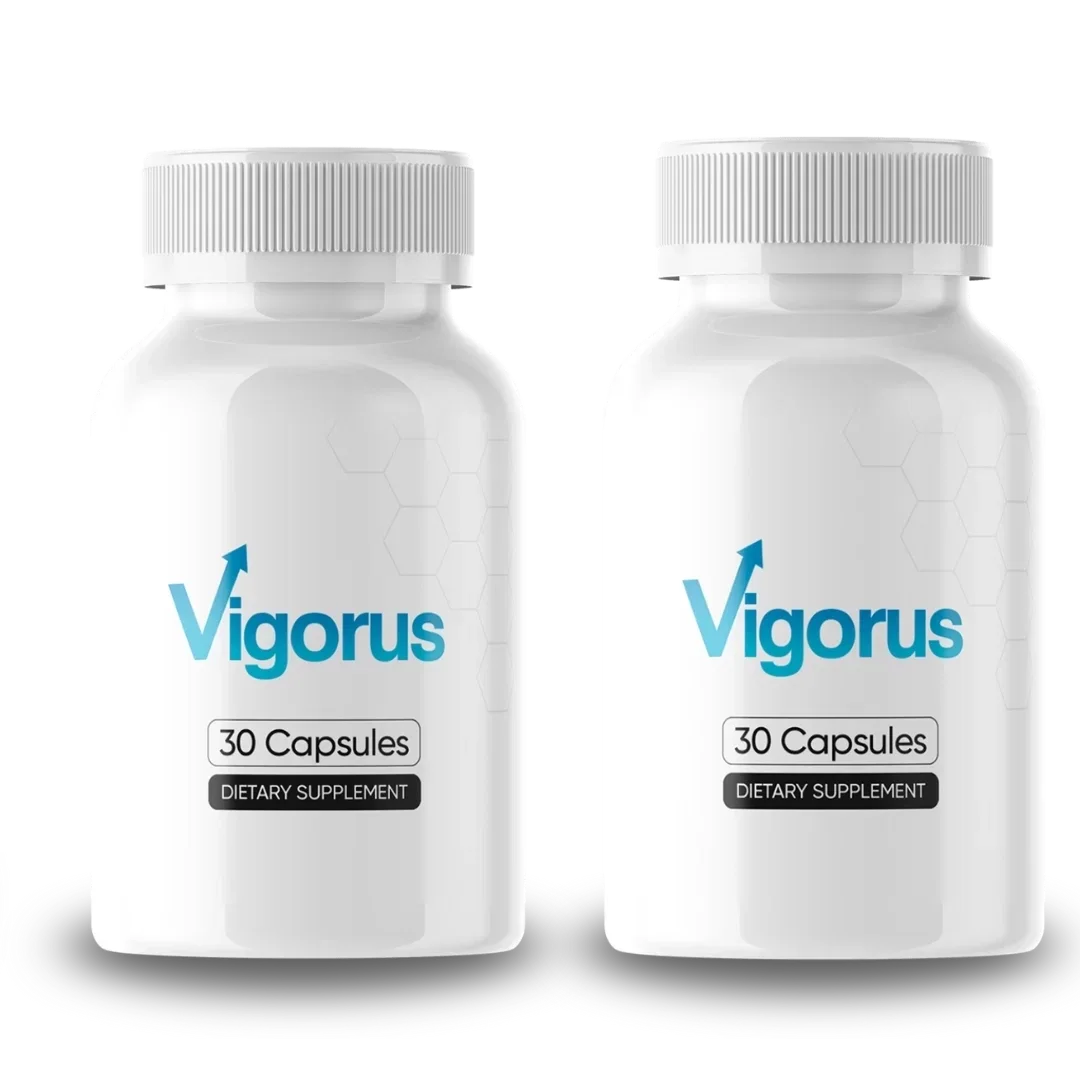
Vigorus is a once-daily men's blend that pairs circulation support with zinc, the mineral European authorities recognise for the maintenance of normal testosterone. One capsule a day, 30 to a bottle, 60-day guarantee.
Order NowAshwagandha and tongkat ali: two levers, one goal
This is exactly why ashwagandha rarely travels alone in a serious men's formula. If ashwagandha takes a foot off the cortisol brake, tongkat ali (Eurycoma longifolia) is studied for pressing gently on the accelerator: it is associated with a nudge to luteinizing hormone, the pituitary signal that instructs the testes to produce testosterone in the first place. One works from the stress side, the other from the signalling side. Pair them and you are addressing two independent bottlenecks instead of hammering the same one twice. We cover the dosing and the evidence base in detail in the guide on how tongkat ali raises luteinizing hormone and its studied dose.
The same complementary logic extends to a third familiar name. Fenugreek is studied more for its effect on libido and on free versus bound testosterone than on total production, which makes it a different lever again; our overview of what fenugreek does for free testosterone and libido sits alongside this one for readers building the full picture. The through-line is that these herbs are not interchangeable. They are a toolkit, and a formula that combines them thoughtfully is making a bet that the male hormone system has several soft spots rather than one.
Three myths worth clearing up before you buy
Myth one: ashwagandha is a testosterone booster in the steroid sense. It is not, and any label implying it works like a drug is overselling. It is an adaptogen with a modest, indirect, cortisol-mediated effect. If a product promises dramatic overnight gains, that promise is not coming from the ashwagandha inside it.
Myth two: more is better. The trials that reported benefits used sensible doses — commonly 300 to 600 mg of a standardised extract — not mega-doses. Doubling the amount does not double the cortisol response, and the withanolide standardisation matters more than the raw milligram count on the front of the tub. A gram of unstandardised root powder is not obviously stronger than 600 mg of a characterised extract.
Myth three: it works instantly. Cortisol adaptation happens over weeks. Every study that found an effect ran for eight to twelve weeks of daily use. If you take it for five days and feel nothing, that is not the herb failing; that is you not having given the mechanism time to operate. Set the expectation at a season, not a weekend, and judge it on sleep, mood, and recovery as much as on any single lab number.
How ashwagandha fits the thinking behind Vigorus
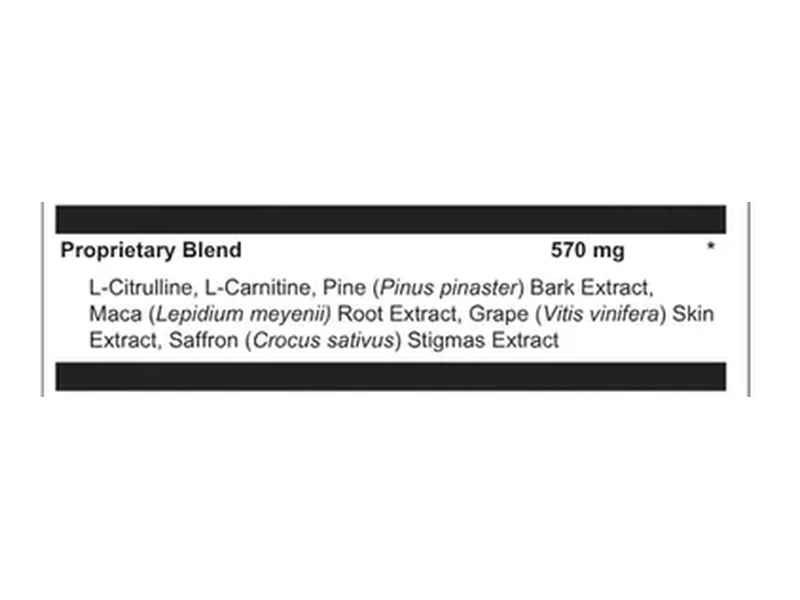
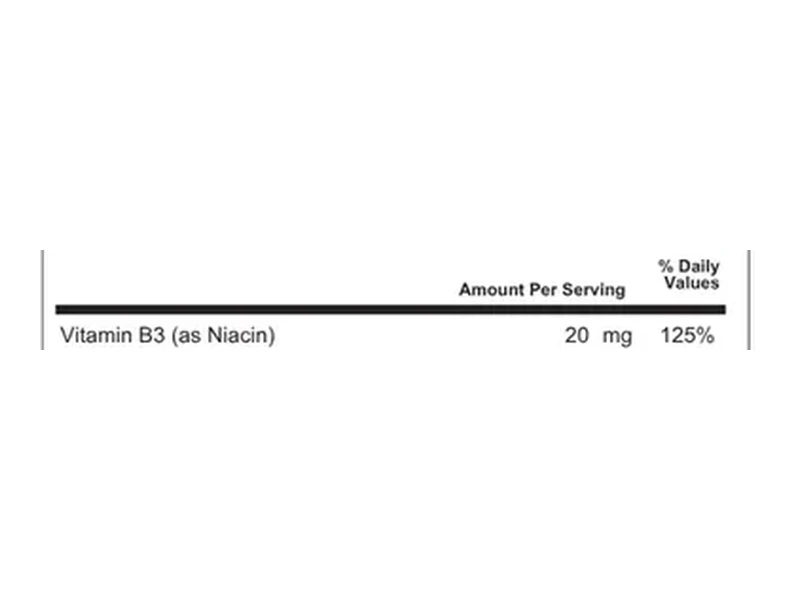
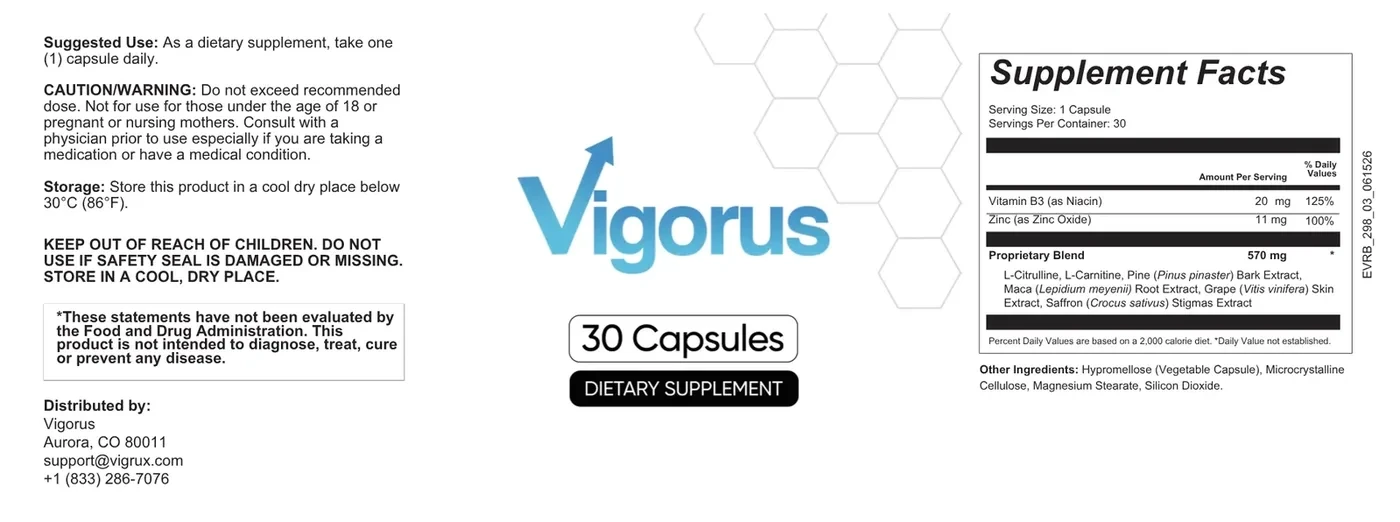
A quick point of honesty, because this is an independent review site and we read labels for a living. Vigorus is a men's health supplement, and its own panel is built around circulation support — L-citrulline for the nitric oxide pathway — together with zinc and niacin, with the botanical portion disclosed as a blend. If you want the full breakdown of that panel, we took it apart in the piece on what is actually inside the Vigorus 570 mg proprietary blend. We are not going to tell you ashwagandha is on that label when the label does not list it.
What ashwagandha explains is the design philosophy that a formula like Vigorus represents: the recognition that male vitality is not a single dial. Zinc has a formal regulatory footing here — European food-safety authorities have authorised the claim that zinc contributes to the maintenance of normal testosterone levels in the blood — and Vigorus supplies a full daily value of it. Citrulline addresses circulation, which is the downstream half of what most men actually want from this category. Ashwagandha's cortisol story is the missing narrative that makes the whole multi-ingredient approach make sense: address stress, address the hormone signal, address circulation, and you have covered the system rather than one corner of it. That is the honest way to weave the science together, and it is why we think in terms of complete formulas rather than single hero ingredients.
How to take ashwagandha, if you decide to
If you want to try ashwagandha on its own terms, the research-backed approach is straightforward. Choose a root extract standardised for withanolides — KSM-66 and Sensoril are the two most-studied brands — at a dose in the 300 to 600 mg range, taken daily. Timing is flexible; some men prefer the evening because the calming effect can help sleep, and better sleep is itself a lever on cortisol and testosterone. Give it a full eight to twelve weeks before you decide whether it is doing anything.
Two honest cautions. Ashwagandha can interact with thyroid medication, sedatives, and immunosuppressants, and it is not recommended in pregnancy; if you take prescription medication or manage a health condition, clear it with a clinician first. And nothing here is a treatment for clinically low testosterone. If your symptoms are significant, the right first move is a blood test, not a supplement — a point we make again in the guide to the natural levers that support healthy testosterone. A supplement is a support for the borderline and the stressed, not a substitute for a diagnosis.
The bottom line
Ashwagandha earns its reputation not by doing something spectacular but by doing something specific: it lowers the cortisol that has been suppressing your testosterone, and it does so reliably enough to show up in controlled trials. That makes it one of the better-evidenced adaptogens in the men's-health aisle, and a clean illustration of why the smartest formulas attack the problem from several angles at once. If you have been chasing a single accelerator ingredient, the more useful question may be which brakes are currently pressed down — and stress is almost always one of them.
Support the whole system, not one dial
Vigorus pairs circulation support with a full daily value of zinc in one capsule a day. Check current bundle pricing and the 60-day money-back guarantee at the official store.
Order Vigorus From the Official StoreRelated reading
Tongkat Ali for Testosterone: Benefits & Dosage
The accelerator to ashwagandha's brake — how it works on luteinizing hormone and what dose the studies used.
Fenugreek and Testosterone: The Benefits
Why fenugreek is studied for free testosterone and libido rather than raw production.
How to Increase Testosterone Naturally
The sleep, training and nutrition levers that move the hormone before any supplement does.
Natural Testosterone Booster Supplements
Which ingredients have real evidence behind them, and how to read past the marketing.
Frequently asked questions
Does ashwagandha raise testosterone?
In several small placebo-controlled trials it did, but indirectly. Ashwagandha is an adaptogen that lowers cortisol, the stress hormone that suppresses testosterone. In one 2019 study, men taking 600 mg of a standardised KSM-66 extract for eight weeks saw testosterone rise about 14.7% more than placebo. It supports testosterone by removing a brake, not by stimulating the testes directly, so results are largest in men who are stressed or run down to begin with.
How much ashwagandha per day for testosterone?
The testosterone and stress research clusters around 300 to 600 mg per day of a root extract standardised for withanolides, most often the KSM-66 form at 600 mg once daily or split into two doses. That is the amount used in the trials that reported hormonal and cortisol changes, taken consistently for eight to twelve weeks. More is not obviously better, and dose should always fit the specific product's label.
How does ashwagandha lower cortisol?
Ashwagandha acts on the hypothalamic-pituitary-adrenal axis, the feedback loop that governs the stress response. By dampening the signal that tells the adrenal glands to keep producing cortisol, it lowers circulating cortisol over weeks of use. Because cortisol and testosterone move in opposition, easing chronic cortisol pressure frees up the conditions in which testosterone can sit at a healthier level.
Can I stack ashwagandha with tongkat ali?
They are often paired precisely because they pull different levers. Ashwagandha lowers cortisol from the stress side, while tongkat ali is studied for nudging luteinizing hormone, the pituitary signal that tells the testes to produce testosterone. One removes a brake and the other presses gently on the accelerator. Multi-ingredient men's formulas lean on that logic, though you should always check the combined label dose and talk to a clinician if you take medication.
References
- NCCIH (National Center for Complementary and Integrative Health) — Ashwagandha
- NIH Office of Dietary Supplements — Zinc, Health Professional Fact Sheet
- NIH Office of Dietary Supplements — Dietary Supplements for Exercise and Athletic Performance
- EFSA — Scientific Opinion on the substantiation of health claims related to zinc
- FDA — Dietary Supplements: What You Need to Know